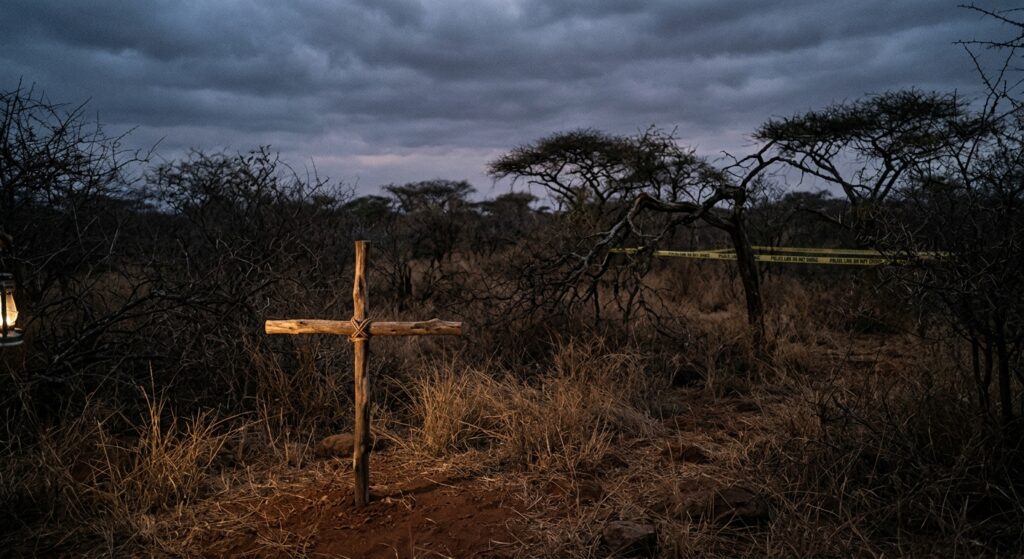
A Tragic Chapter in Kenya’s History
In one of the most horrific religious cult tragedies in modern history, self-proclaimed pastor Paul Nthenge Mackenzie has reached a critical juncture in the Kenyan judicial system. Mackenzie, the founder of the Good News International Church, stands at the center of a harrowing legal battle following the discovery of hundreds of bodies buried in shallow graves within the remote Shakahola forest in coastal Kenya. The sheer scale of the atrocity has shocked the nation and drawn international horror, particularly as prosecutors levy 191 murder charges against Mackenzie and his co-accused—with all but one of the victims being innocent children.
The Shakahola Forest Massacre: Uncovering the Nightmare
The nightmare began unfolding in early 2023 when local authorities and human rights activists uncovered shallow graves scattered across the vast 800-acre Shakahola forest near Malindi. What started as an investigation into missing persons quickly escalated into a massive exhumation operation that eventually uncovered over 400 bodies. Investigators revealed that followers were systematically persuaded to starve themselves and their children to death under the apocalyptic promise that they would "meet Jesus" before the end of the world.
Pathology reports and forensic evidence painted a devastating picture of the victims’ final days. While severe starvation was the primary cause of death, autopsies conducted on several bodies, especially those of young infants and children, revealed signs of asphyxiation and blunt force trauma, suggesting that those who resisted or struggled to endure the extreme fasting were forcefully killed.
The Legal Battle: Facing 191 Murder Charges
The legal proceedings against Paul Mackenzie and dozens of his associates represent one of the largest criminal prosecutions in Kenyan history. The Director of Public Prosecutions has brought multiple legal charges spanning different court divisions to address the scope of the crimes committed:
- Murder Charges: Confronting 191 counts of murder in high-profile proceedings focusing heavily on the child victims who perished in the forest.
- Terrorism Charges: Accusations of engaging in criminal activities under the Prevention of Terrorism Act due to the radicalization and systematic destruction of human lives.
- Manslaughter and Child Cruelty: Additional charges related to cruelty, torture, and denying children access to education and basic medical care.
Despite the overwhelming physical evidence and testimonies from survivors rescued during police raids, Mackenzie has consistently denied wrongdoing, claiming he closed his church in 2019 and had no control over the actions of those living in the forest.
Indoctrination, Isolation, and Control
Understanding how hundreds of people were led into such catastrophic harm highlights the dangerous mechanics of extremist cult leadership. Mackenzie utilized apocalyptic rhetoric, warning his followers of an imminent end of days and urging them to reject modern societal systems, including formal education, healthcare, and government identification.
Followers sold their belongings, cut ties with their families, and relocated deep into the dense Shakahola terrain. Isolated from the outside world and completely reliant on cult leadership, victims were trapped in a tightly controlled ecosystem where dissent was met with physical coercion. Children were the most vulnerable victims of this dogma, unable to consent or defend themselves against forced starvation practices.
Societal Reckoning and Religious Regulation in Kenya
The Shakahola cult case has sparked an intense national debate in Kenya regarding the regulation of religious institutions. Kenya is a predominantly Christian nation with thousands of churches, ranging from established mainstream denominations to unregulated evangelical and charismatic movements. The tragedy exposed critical gaps in state oversight, enabling charismatic leaders to operate without accountability.
In response, religious leaders, legal experts, and civil society organizations have called for stricter legal frameworks to identify and shut down dangerous cults before tragedy strikes, while striving to protect constitutional rights to freedom of worship. The government has also faced scrutiny over delayed intelligence responses despite early warnings raised by local community members regarding suspicious activities in the forest.
Seeking Closure for Victims and Survivors
For the surviving family members, the legal verdicts offer a grim but necessary step toward justice. Hundreds of families continue the agonizing process of identifying loved ones through DNA matching, a meticulous task complicated by the state of the remains exhumed from the forest soil.
As the judicial system delivers its verdicts and processes the overwhelming evidence, the Shakahola massacre stands as a solemn reminder of the devastating consequences of unchecked religious extremism. The memory of the 191 young lives lost in the forest will permanently shape Kenya’s legal, social, and spiritual landscape for generations to come.