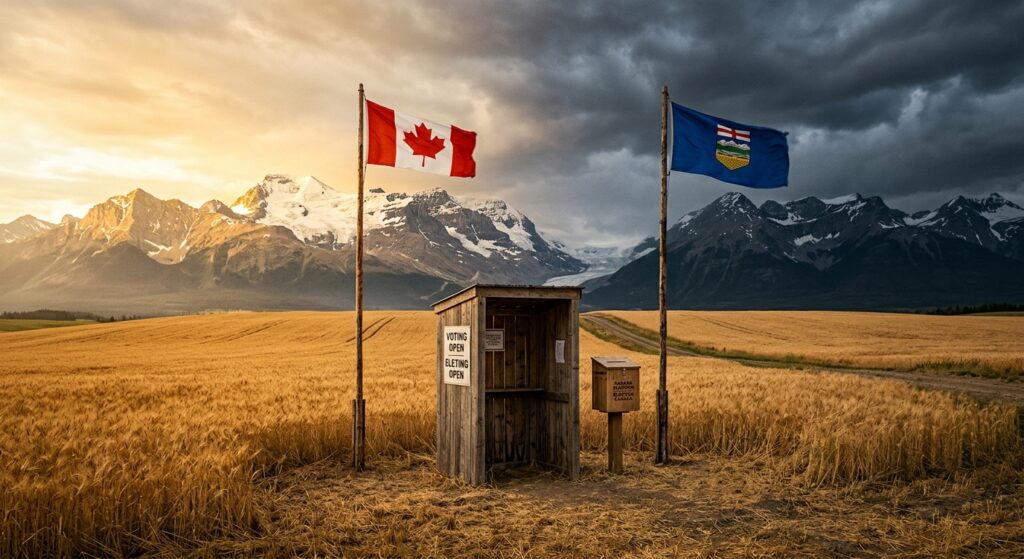
A Historic Day at the Polls in Western Canada
Today marks a pivotal moment in Canadian political history as citizens across Alberta head to the polling stations to voice their stance on one of the most contentious issues in modern Canadian politics: the question of Alberta’s separation from the confederation. For months, debates have flared across community halls, digital forums, and broadcast networks, bringing long-standing grievances between Western Canada and the federal government in Ottawa to a dramatic boiling point.
While the prospect of an independent Alberta has gained significant media traction and ignited passionate rallies, the reality on the ground presents a complex political narrative. Today’s vote is not merely about drawing new international borders; it is a profound referendum on regional identity, economic self-determination, and the future of Canadian federalism.
The Root of the Debate: Western Alienation and Autonomy
To understand why separation is even on the ballot today, one must look at the deep-seated feeling of “Western alienation” that has persisted in Alberta for decades. Blessed with vast oil and gas reserves, Alberta has long served as an economic powerhouse for Canada, contributing billions of dollars in federal equalization payments to support public services in other provinces.
However, many Albertans feel that Ottawa’s federal policies—particularly regarding environmental regulations, energy sector caps, and natural resource management—hinder the province’s economic potential. The friction between the provincial government in Edmonton and the federal leadership has created a growing appetite for greater autonomy. Proponents of separation argue that an independent Alberta could retain its wealth, streamline its energy export strategies, and govern without perceived interference from Eastern Canada.
What the Latest Polling Data Shows
Despite the high volume of the sovereignty movement, recent polling data released on the eve of the vote suggests that a majority of Albertans still favor remaining part of Canada. The BBC and leading local pollsters indicate that while frustration with the federal government is nearly universal, support for full independence remains a minority stance.
According to recent surveys, a solid majority of respondents express a preference for reforming Alberta’s relationship with Canada within the existing constitutional framework rather than pursuing a total political break. Nevertheless, the poll numbers also highlight how deeply divided the province has become. The movement for autonomy has garnered enough support to make today’s turnout crucial, with both unionists and separatists campaigning vigorously until the final minutes before polls opened.
Arguments for Sovereignty vs. The Case for Confederation
The campaign leading up to today’s vote has drawn sharp contrasts between two very different visions for Alberta’s future.
The Sovereignty Argument
Proponents of Alberta independence emphasize economic freedom and self-reliance. Key points advocated by the independence movement include:
- Tax and Wealth Retention: Keeping all provincially generated tax revenue within Alberta rather than transferring funds through federal equalization programs.
- Energy Deregulation: Unilateral authority over natural resource extraction, pipelines, and environmental policies without federal climate mandates.
- Custom Law Enforcement: Establishing an independent provincial police force and tax collection system tailored to local priorities.
The Unionist Argument
Conversely, those advocating to stay in Canada warn of the severe practical and economic perils associated with secession. Opponents of separation stress:
- Landlocked Vulnerability: As an independent, landlocked nation, Alberta would still rely entirely on neighboring regions to transport its oil and agricultural goods to global markets.
- Economic Turbulence: Unraveling from Canada would mean creating a new currency, establishing novel trade treaties, and facing potential capital flight due to economic uncertainty.
- Social Division: Secession could strain relations with Indigenous communities, who hold unique treaty rights directly tied to the Canadian Crown.
Political and Social Fallout Across Canada
Regardless of today’s final tally, the debate itself has already left an indelible mark on Canadian politics. The referendum has forced federal leaders in Ottawa to confront the deep frustration radiating from Western Canada. A strong turnout for remaining in Canada will not necessarily mean a return to the status quo; rather, it will put immense pressure on federal lawmakers to offer concessions, grant regional exemptions, and re-evaluate fiscal federalism.
For ordinary Albertans, the referendum has caused fractures within families, workplaces, and neighborhoods. The emotional weight of identity—being Albertan versus being Canadian—has made this vote far more personal than a standard provincial election.
Conclusion: A Clear Message to Ottawa
As election officials count the ballots tonight, the world will be watching Western Canada closely. While the polls suggest that Alberta will ultimately choose to remain within Canada, the high level of participation proves that the underlying grievances cannot be ignored. Today’s vote is a clear signal that the relationship between Alberta and the federal government must evolve. Win or lose, the independence debate has forever reshaped the landscape of Canadian democracy.